


Visiting Vaison-la-Romaine: 2,000 Years of History in Provence
At the foot of Mont Ventoux, Vaison-la-Romaine is home to France’s largest Gallo-Roman archaeological site, a hilltop medieval town, and a Roman bridge that’s two millennia old. To explore Vaison-la-Romaine—home to ancient sites, the Upper Town, and our recommendations—it’s about a 30-minute drive from our campsite in the Vaucluse. With its mosaics, ancient theater, and medieval alleyways, the town is easy to explore on foot along both banks of the Ouvèze River.
Vaison-la-Romaine at a Glance
- The town is located in the Vaucluse department, in Provence, at the foot of Mont Ventoux.
- It is home to the largest Gallo-Roman archaeological site in France.
- The Puymin and La Villasse neighborhoods feature villas, mosaics, and thermal baths.
- The ancient theater, dating from the 1st century, still hosts the Vaison Danses festival.
- A Roman bridge connects the lower town to the medieval town and its castle.
Ancient Sites: Puymin and La Villasse
The two major Gallo-Roman districts form the heart of the tour and can be explored with a single ticket:
The Puymin Site and the Ancient Theater
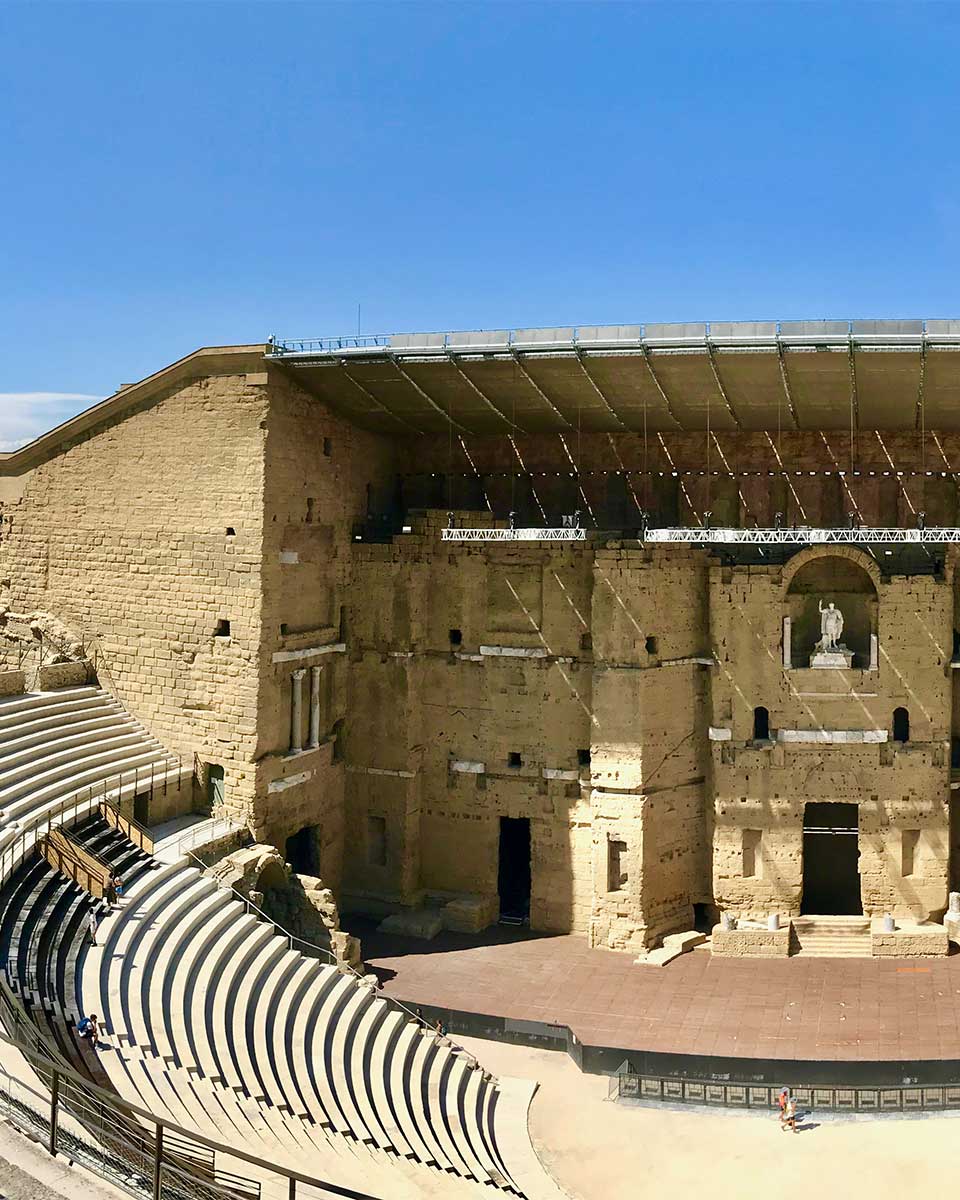
Puymin is home to magnificent residences, such as the Maison à la Tonnelle and the Maison à l’Apollon Lauré, with their mosaics, thermal baths, and heated rooms. In the town center, the Théo Desplans Archaeological Museum houses more than 2,000 everyday objects and ancient statues. A little further up, the 1st-century theater, which could seat 5,000 spectators, still serves as the venue for the Vaison Danses festival.
The La Villasse Site
Below, La Villasse reveals the ancient commercial district and its colonnaded streets. Here, visitors can explore the public baths and sumptuous residences, with their interconnected rooms and mosaic floors. This commercial district complements Puymin and offers a vivid picture of the Roman city of old.
Good to know: Be sure to wear comfortable shoes and a hat, as the sites are large and offer little shade in the middle of summer. A single ticket grants access to both sites and the museum. Audio guides in several languages make the visit easier; be sure to pick one up early in the morning before it gets too hot.

The Roman Bridge and the Medieval City
To reach the Upper Town, you cross the Roman bridge— a designated historic monument—which has spanned the Ouvèze River for nearly two thousand years. On the other side lies the Upper Town, with its ramparts, cobblestone streets, and castle, built by the Counts of Toulouse.
Along the way, the Saint-Quenin Chapel and, in the lower town, the Notre-Dame-de-Nazareth Cathedral with its Romanesque cloister serve as reminders of the city’s rich religious history. This contrast between ancient ruins and medieval stonework is what gives the city its charm.
Around Vaison: Ventoux, the Dentelles, and markets
The city is an ideal base for exploring Provence’s villages and vineyards. On Tuesday mornings, the large market brings life to Place Montfort and its plane trees, with its array of olives, cheeses, and local products.
All around, Mont Ventoux and the Dentelles de Montmirail, with their trails, invite you to go hiking, whileOrange, with its ancient theater, and Nyons, with its olive groves, round out the experience. Our campsite near Vaison-la-Romaine makes it easy to explore the entire region.
The La Simioune team’s recommendation: From Bollène, about 30 minutes away, we suggest starting with the ancient sites in the morning, then having lunch at Place Montfort before heading up to the Upper Town. In the summer, set aside an evening to catch a performance at the Vaison Danses festival, set against the unique backdrop of the ancient theater.
Looking for a base between Mont Ventoux and the vineyards for your vacation in Provence? Book your stay at La Simioune Campsite in Bollène and set out to explore Vaison-la-Romaine and its treasures!

FAQ – Visiting Vaison-la-Romaine
What to See in Vaison-la-Romaine?
Don’t miss the Puymin and La Villasse neighborhoods, the Gallo-Roman theater, the Théo Desplans Museum, and the Roman bridge. The Upper Town, with its castle and the Notre-Dame-de-Nazareth Cathedral, rounds out the tour, offering a blend of ancient ruins and Provençal heritage.
How long does the tour take?
Plan on half a day for the main sights, and a full day to take your time exploring the two Gallo-Roman neighborhoods, the museum, and the hilltop town. Add in the Tuesday market and a break at an outdoor café, and the town can easily fill a lovely day.
What are the opening hours for the Gallo-Roman quarters?
Archaeological parks are open daily, usually from 9:30 a.m. to 6:00 p.m. from April through September. Hours are shorter during the off-season, often limited to mornings and afternoons. It’s best to check the daily hours before you go, especially in winter.
Can you explore the city on foot?
Yes, you can explore the entire town on foot. The ruins, the town center, and the Upper Town are connected by the Roman bridge. The narrow streets of the hilltop town climb slightly, so sturdy shoes are recommended, especially if you’re heading to the castle of the Counts of Toulouse.
What's there to do in the area?
Mont Ventoux and the Dentelles de Montmirail offer hiking trails and panoramic views. Orange and its grand theater, Nyons and its olive groves, and the hilltop villages of Drôme Provençale round out a wonderful vacation, combining heritage, vineyards, and the markets of Provence.